Student Contributor: Kandice Adams
Midwestern State University Bachelor of Musical Arts, Class of 2028
In February of 1899, composer Edward Elgar (1857-1934) completed the work on a piece of music entitled Variations on an Original Theme, Op. 36. Little did he know at the time that this piece of work would move him from being just a well known and respected British composer to an internationally celebrated symbol of British music. By the 1960s, Elgar’s music would be known as “quintessentially English.”
A SIMPLE PARLOR GAME
In October of 1898, Edward Elgar and his wife, Alice, were simply passing the time by the piano in their parlor. He played a short melody that she enjoyed and asked him to play again. This would become the main theme for Variations. Edward began playing short alterations of this theme based on friends of the couple. They enjoyed the evening, and thankfully, Edward wrote down the theme and subsequent “sketches” as he called them, of his friends, Alice, and even a “self-portrait” as the last movement.
SO WHERE IS THE “ENIGMA”?
One could say there are several layers to the enigma of this work, but the true mystery comes from Elgar himself who had one word written on the top of the entire piece: Enigma. When asked directly about the context his reply: “The Enigma I will not explain. Its dark saying must be left unguessed, and I warn you that the apparent connection between the Variations and the Theme is often of the slightest texture; further, through and over the whole set, another and larger theme ‘goes’ but is not played… So the principal theme never appears…” Elgar stated that a larger, unplayed melody goes “through and over the whole set”, meaning the main “Enigma” theme is meant to counterpoint another famous, hidden melody that he refused to identify.
CRACKING THE CODE
This hidden principal theme has never been officially revealed. For over a century, scholars and musicians have speculated about this “dark saying” and tried to identify the melody that “never appears.” Here is a brief video describing the ongoing obsession with solving Elgar’s “Enigma.” Even though there is no way to ever truly know what the mysterious theme was, that has not stopped people worldwide from trying to figure it out.
WHAT DO YOU MEAN THERE ARE 15 SECTIONS OF THE SAME THEME??
No worries about your pets at home or the parking meter, these sections go quickly with the entire work running only about 30 minutes. Section II is a mere 45 seconds long! Musically, each “sketch” is incredibly diverse, just like Elgar’s friends, so you can easily listen and enjoy the whole piece. This work moves seamlessly between beautiful slow sections and heavy march-like moments. It has happy moments and some that are melancholy. In each variation the main theme shows up in different ways so it’s never “the same thing” over and over.
STILL RELEVANT AFTER ALL THESE YEARS
In March 1999, the blockbuster movie, The Matrix, was released. One of the main title themes that appear throughout the film is “Clubbed to Death (Kurayamino Variation)” by Rob Dougan. This EDM (electronic dance music) track relies heavily on Elgar’s Enigma Variations, (specifically Variation I, “C.A.E.”). This song would be used in all three of The Matrix movies and plays more than a background role. Many great classical pieces, as well as outstanding contemporary works, are featured in film. Many audiences enjoy hearing film music, and the WFSO programs familiar and underrated classical film music often – most recently during its 2025 season premiere concert, Hollywood Hits.
CAN YOU SOLVE THE ENIGMA?
For over a century, musicians, scholars, and music enthusiasts alike have tried to solve Edward Elgar’s musical riddle. Some have been simple guesses and others have been in-depth theories. From the British Isles to international fame, Enigma Variations has captivated audiences with its theme and all of its variations. Perhaps though, the best way to solve this puzzle is simply to listen and enjoy.
Through a special collaboration with Dr. Erica Rumbley and students in Midwestern State University’s Department of Music, the Wichita Falls Symphony Orchestra is featuring student-written articles on The Green Room blog. During the Fall 2026 semester, students in Dr. Rumbley’s Western and World Music III course are exploring the music, composers, and fascinating stories behind the WFSO’s 2026–27 season, offering fresh perspectives while sharing their musical knowledge with the Texoma community.
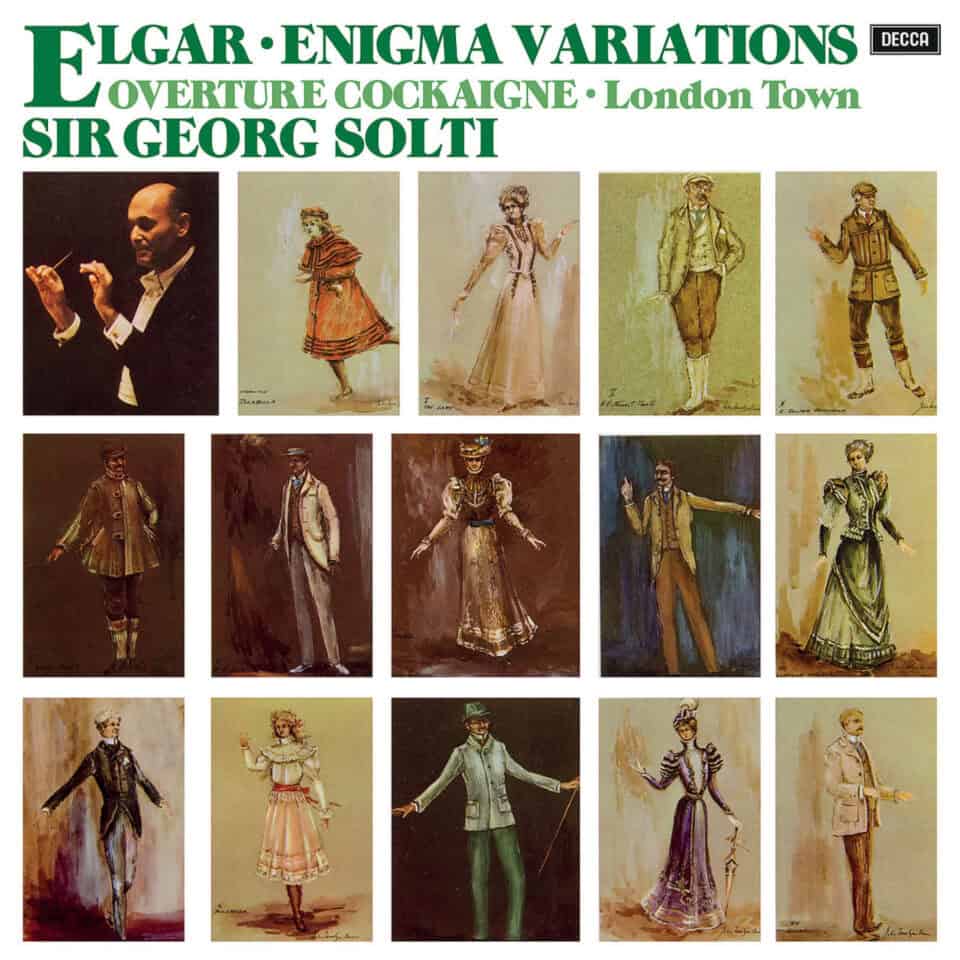
Image Credit: Elgar: Enigma Variations / Overture Cockaigne (London Town), Sir Georg Solti. Album cover © Decca Records.