If you’ve ever looked at a concert program and wondered what words like concerto, opus, or fortissimo mean, you’re not alone.
Classical music has developed its own vocabulary over hundreds of years, much of it rooted in Italian, German, and French. While the terminology may seem unfamiliar at first, understanding a few common terms can make every concert even more enjoyable.
Here are some of the words you’re most likely to encounter.
Symphony
A symphony is a large musical work written for a symphony orchestra. Most symphonies have multiple movements, each with its own mood and tempo.
Famous examples include Beethoven’s Symphony No. 5 and Dvořák’s Symphony No. 9, “From the New World.”
Orchestra
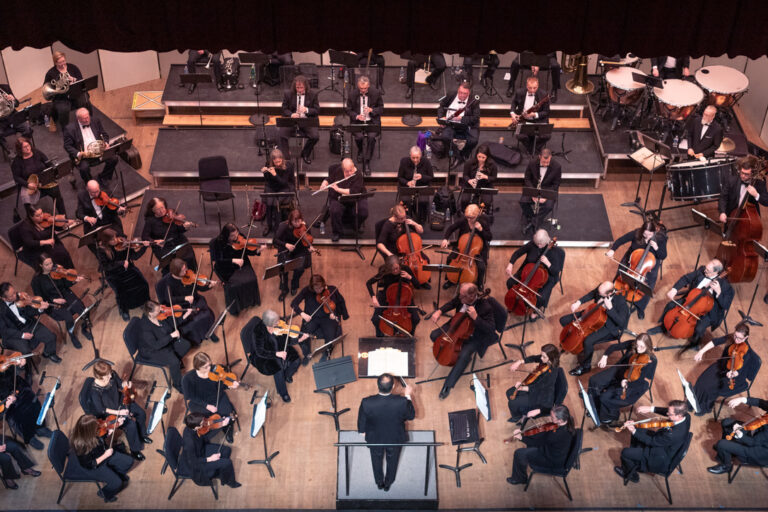
An orchestra is the group of musicians performing together. A full symphony orchestra includes strings, woodwinds, brass, and percussion.
Concerto
A concerto features one solo instrument accompanied by the orchestra.
The soloist takes center stage while the orchestra provides both support and conversation throughout the piece.
Popular concertos have been written for piano, violin, cello, trumpet, flute, and many other instruments.
Overture
An overture is an opening orchestral work.
It may introduce an opera, musical, or ballet, or it can stand alone as its own concert piece.
Movement
Think of a movement as a chapter in a book.
Large musical works are divided into separate sections, each with its own character, while contributing to the larger story.
Maestro
Traditionally, maestro is an honorary title of respect for an accomplished conductor or musician.
Today, some conductors are addressed this way, while others simply prefer “conductor” or “music director.”
Baton
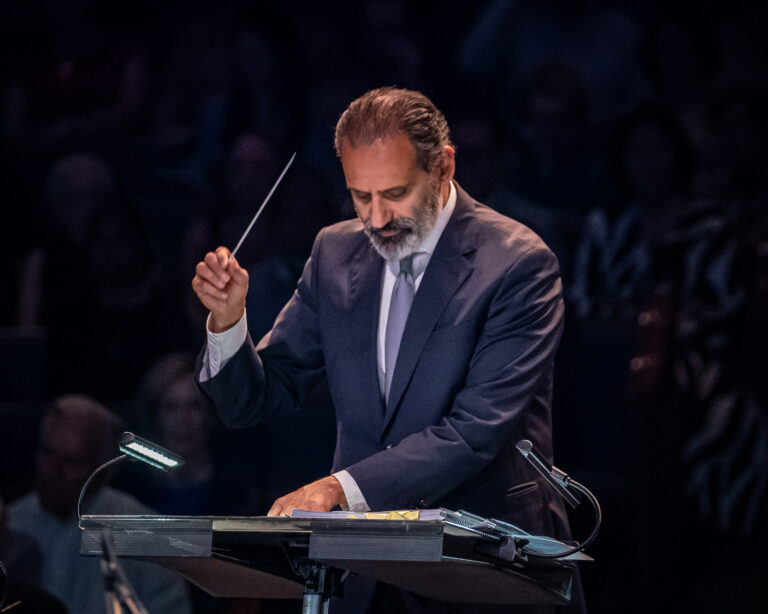
The baton is the small white stick many conductors use to make their gestures easier for musicians to see across the stage.
Not every conductor uses one, but many do.
Tempo
Tempo refers to how fast or slow the music is performed.
Common tempo markings include:
- Largo – Very slow
- Adagio – Slow and expressive
- Andante – A comfortable walking pace
- Moderato – Moderate speed
- Allegro – Fast and lively
- Presto – Very fast
Dynamics
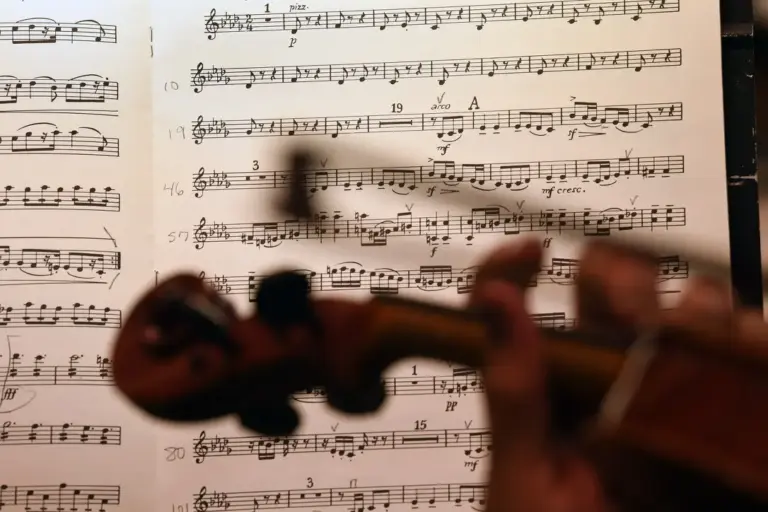
Dynamics describe how loudly or softly the music should be played.
Some common markings include:
- Piano (p) – Soft
- Mezzo piano (mp) – Moderately soft
- Mezzo forte (mf) – Moderately loud
- Forte (f) – Loud
- Fortissimo (ff) – Very loud
Despite the name, piano here means “soft,” not the instrument.
Crescendo and Diminuendo
A crescendo means the music gradually becomes louder.
A diminuendo (or decrescendo) means it gradually becomes softer.
These changes help create tension, excitement, or moments of quiet reflection.
Solo and Ensemble
A solo features one performer.
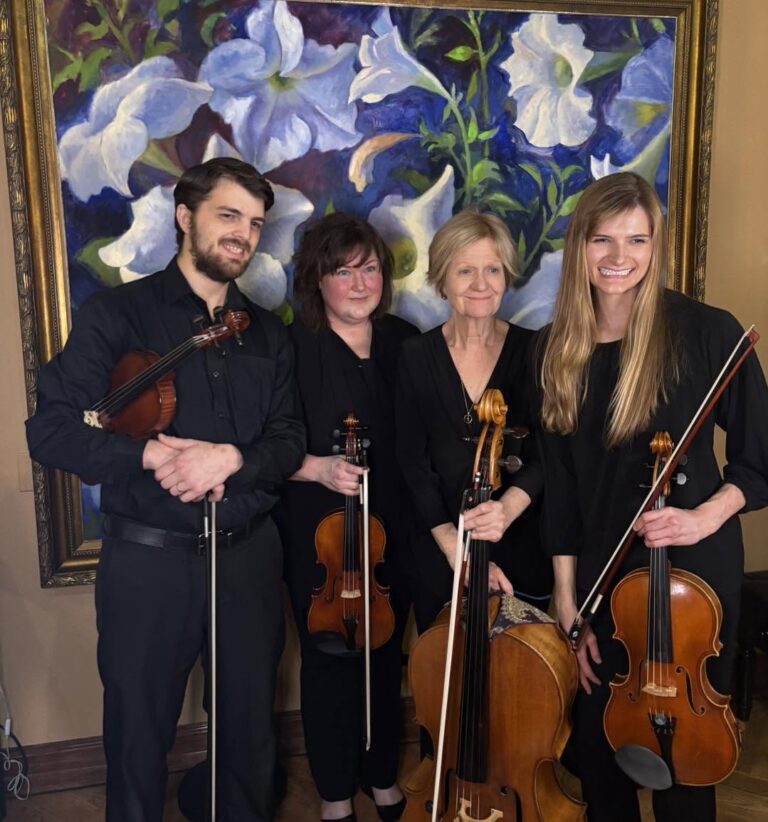
An ensemble refers to musicians performing together, whether that’s a duet, string quartet, chamber orchestra, or full symphony orchestra.
Opus
Opus, often abbreviated Op., simply means “work.”
Composers frequently numbered their published works, such as Symphony No. 5, Op. 67.
Not every composer used opus numbers, but you’ll often see them in concert programs.
Standing Ovation
While not a musical term, a standing ovation is one of the audience’s highest compliments.
When listeners are especially moved by a performance, they may rise to their feet in appreciation. There are no rules requiring you to stand. Applauding from your seat is equally welcome.
You Don’t Need to Know the Vocabulary
One of the greatest misconceptions about classical music is that you have to understand all the terminology before attending a concert.
You don’t.
You don’t need to know the names of every instrument or recognize every composer to enjoy live music. Curiosity is more important than vocabulary.
The more concerts you attend, the more familiar these terms naturally become.
The Wichita Falls Symphony Orchestra welcomes everyone, whether you’re a lifelong music lover or attending your very first performance. Every concert is an opportunity to discover something new, and every audience member belongs.
After all, music is one of the few languages that can move us deeply before we understand a single word.